

Pulp & Paper
Your dryer section runs 24/7. Most of your motor-driven fleet runs unmonitored.
Pulp and paper mills run hundreds of motors from the wet end to the winder. Many critical and semi-critical motors sit outside continuous condition monitoring because floor-mounted sensors are hard to scale, replace, and justify on a per-asset basis. SAM4 monitors motor-driven assets from the motor control cabinet.
Trusted by leading pulp and paper mills


Most monitoring covers the few. The faults that stop production live in the rest.
Three coverage gaps that route-based and sensor-mounted monitoring leave wide open.
The critical few
Vibration sensors mounted on the highest-criticality machines: dryer drives, primary refiners, the main press. Continuous data on the assets that justify the install cost.
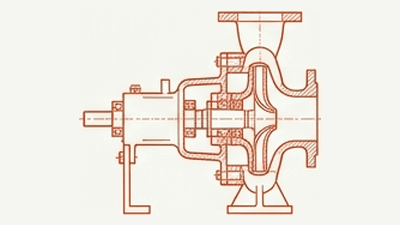
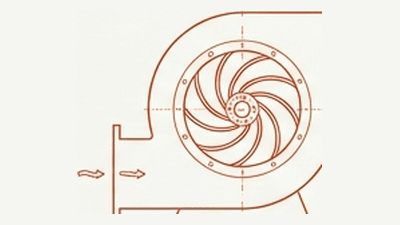
The 200 kW vacuum pump, the stock prep agitator, the condensate return pump. Hundreds of motor-driven assets where per-asset sensor coverage is too expensive to justify, but where a failure still stops production.
Mechanical signals on enclosed motors
Vibration data on totally enclosed motors in dry, accessible locations. Where sensors can be installed and maintained, the fault library is mature.
Open drip-proof motors in steam, dust, and acid fumes, common in pulp and paper, fail at four times the rate of TEFC units. Mounted sensors drift, corrode, and fail. Coverage degrades faster than the install can pay back.
Real-time mechanical faults
Bearing wear, imbalance, coupling faults, anything where a sensor on the asset reads a frequency change directly.
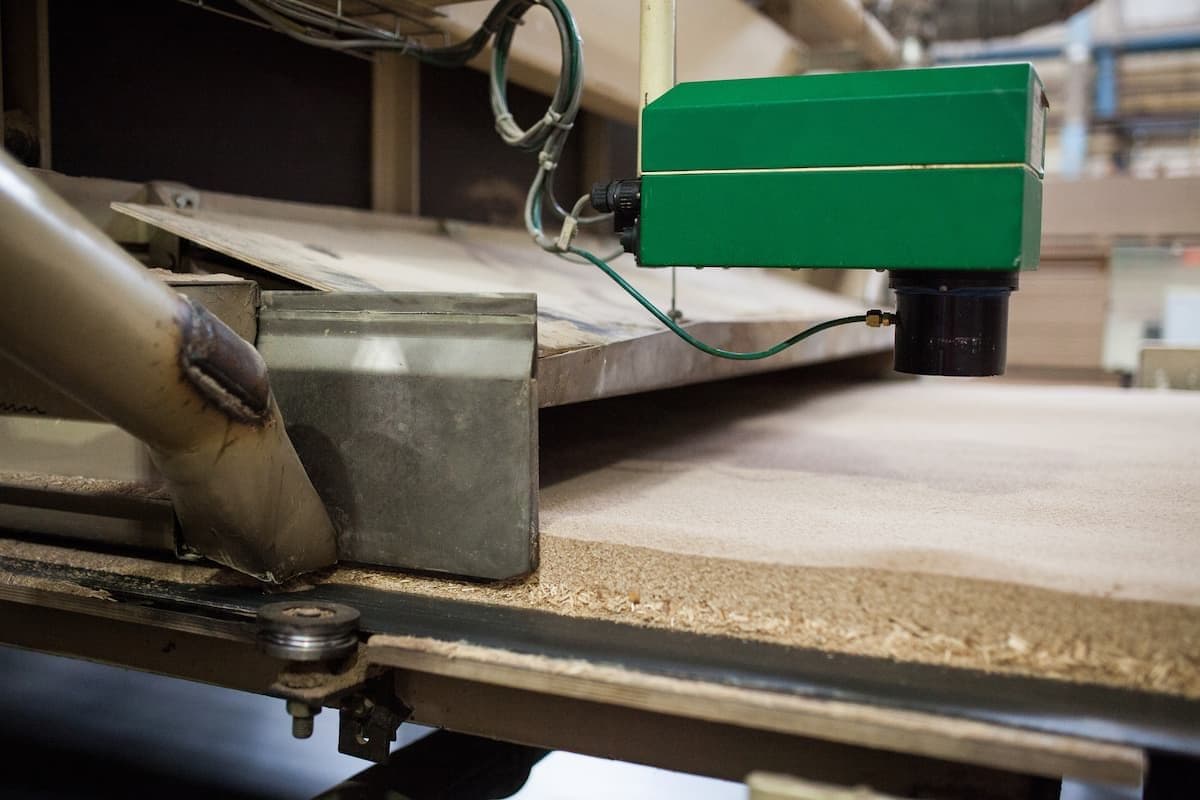
Process signals that propagate through the line. Refiner plate wear changes pulp quality and machine behaviour, but the signal travels through digesters, washers, and stock prep over hours or days. Conventional monitoring does not connect these delayed signals.
How SAM4 changes the equation
Monitor from the MCC, not the mill floor
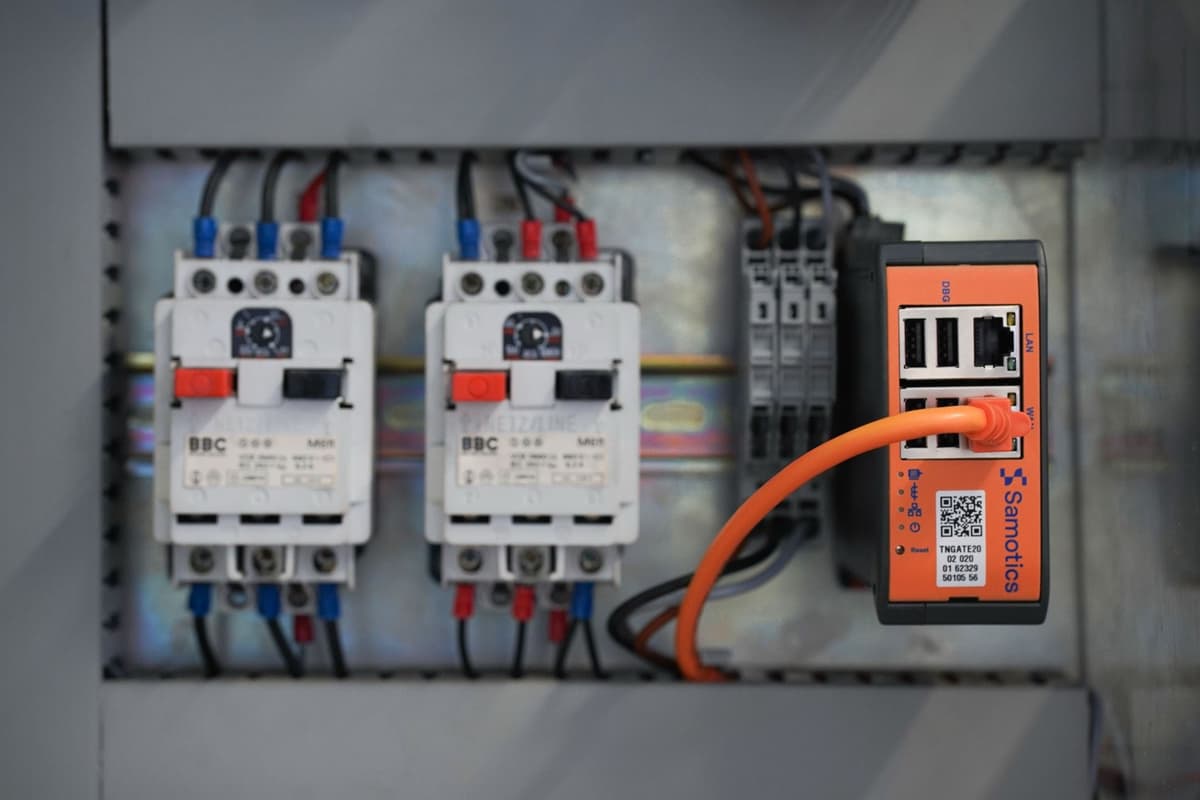
SAM4 clips onto the motor supply cable inside the motor control cabinet. No sensors near steam, no wiring through wet environments, no work permits for confined spaces. One installation point covers the motor, the driven equipment, and the process load. The cabinet is clean, dry, and accessible during production.
More motors, not just the critical few
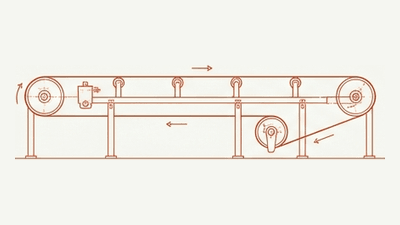
Vibration programmes often cover the highest-criticality machines. SAM4 makes it easier to extend monitoring to pumps, fans, conveyors, refiners, and auxiliary drives that are operationally important but hard to justify with mounted sensors. The faults that shut down production are often on the 200 kW vacuum pump, the stock prep agitator, or the condensate return pump that nobody thought to monitor.
Energy and condition in one measurement
ESA captures energy consumption and mechanical health from the same electrical signal. When a bearing degrades, energy consumption rises before vibration does. SAM4 tracks both, giving maintenance teams a condition indicator and giving energy managers continuous data that supports EED audit activity and ISO 50001 work.
The pattern library helps preserve operational knowledge
SAM4 compares new fault evidence against patterns seen across thousands of motors in pulp and paper, chemicals, metals, and water. It does not replace experienced maintenance teams; it gives them earlier evidence and a shared memory across shifts, sites, and retirements.
From alert to action
SAM4 classifies the alert
The system detects an anomaly and classifies it: bearing degradation, coupling fault, belt wear, electrical issue, or process deviation. The alert includes severity, trend direction, and recommended action. No raw data interpretation required.
Your engineer validates
The maintenance team reviews the alert in SAM4's dashboard. They see the asset, the fault type, the severity trend, and comparable detections from similar assets. They decide whether to inspect, schedule, or watch.
Planned repair, not emergency response
Parts are ordered. The crew is scheduled. The repair happens during a planned window. No emergency sheet break. No scramble to find a spare refiner plate. No two-hour restart to get back to saleable paper. At Pfleiderer, this shift from reactive to planned maintenance is what drove the 55-of-57 detection rate.
Maintenance documentation closes the loop
Every alert, inspection, and repair is logged. Energy managers get the continuous consumption data required for EED audits. Reliability engineers get trending data for capital planning. The system builds institutional memory that survives shift changes and retirements.
Installed at the MCC during planned cabinet work.
SAM4 installs at the motor control cabinet. No sensors are mounted on the mill floor. Most installations take under 60 minutes once cabinet access and safe-working approval are in place.
Clip CT sensors onto the motor supply cables inside the MCC
One cabinet, multiple motors. No wiring to the mill floor.
Connect the SAM4 data acquisition unit
It sits inside or beside the MCC. Cellular or Ethernet backhaul. No integration with the mill DCS required.
SAM4 builds its baseline from live measurements
Within weeks, it detects anomalies against normal operating patterns. No historical data import needed.
Where SAM4 fits, and where it needs review
SAM4 is strongest where the monitored asset is AC-motor-driven, the electrical signal is accessible at the MCC or VFD, and the failure modes create measurable changes in current, voltage, torque, speed, or load. Fit depends on motor configuration, drive topology, duty cycle, load stability, operating regime, and the failure modes you want to detect. During asset-fit review, we identify which assets are strong candidates, which need engineering review, and which are better covered by vibration, process instrumentation, OEM monitoring, or inspection.
Common questions
Yes. SAM4 is highly compatible with VFDs. Variable speed drives are increasingly common in pulp and paper for energy savings on fans, pumps, and refiners. SAM4 monitors VFD-driven motors from the MCC using the same clip-on installation.
SAM4 complements vibration, it does not replace it. On assets where vibration sensors are installed and working, ESA adds electrical fault detection, energy data, and process insights that vibration cannot see. On the rest of your fleet, the motors with no vibration coverage, SAM4 is the primary condition monitoring source. Most mills find that eighty percent of their motors have no monitoring at all. SAM4 fills that gap.
ESA detects bearing degradation, mechanical imbalance, belt wear, cavitation, coupling faults, motor winding issues, and grid-level electrical faults. It also detects load anomalies that may indicate process changes like refiner plate wear affecting downstream quality. It does not detect mechanical seal degradation on pumps or internal valve faults. We state these limitations because honesty about detection boundaries builds more trust than overclaiming.
Yes. ESA captures continuous energy consumption data for every monitored motor. This data supports mandatory energy audits under the EU Energy Efficiency Directive and feeds ISO 50001 energy management systems. You get condition monitoring and energy compliance from one installation.
Yes. SAM4 monitors from the motor supply cable at the MCC, not from the motor itself. Open drip-proof motors, which are common in paper mills and fail at higher rates than totally enclosed units, are monitored the same way as any other motor. The hostile environment that degrades sensors on the motor has no effect on measurements taken at the cabinet.
At $1,500 to $5,000 per minute of unplanned downtime on a paper machine, a single avoided sheet break and the two-hour restart that follows can pay for a multi-year deployment. Pfleiderer detected 55 out of 57 faults over 24 months at a single plant. The payback depends on your machine speed, grade mix, and current failure rate. We provide a plant assessment that models the expected return for your specific operation.
SAM4 does not connect to the mill DCS, PLC network, or process historian. It operates on a separate data path using its own cellular or Ethernet backhaul. No inbound connections to the mill network are required. Data is encrypted in transit and at rest. SAM4 meets IEC 62443 industrial cybersecurity standards.
Extend monitoring from the wet end to the winder.
See where cabinet-based monitoring fits your mill. No sensors on the floor. Planned cabinet installation. No DCS write path.